


Handle Comfort and Heat on CuisinartⓇ Cookware
When trying out a new cookware style, the cookware handle is too often overlooked. Handle comfort and heat safety should be considered when it comes to how you work with your cookware.
Understanding how handle design varies across cookware lines can make your kitchen safer and more enjoyable.

Why Handles Heat Up
All cookware conducts heat, and handles are no exception. This is especially true on stainless steel and multi-ply pieces. Always be mindful of the heat applied to your handles. How much a handle may heat depends on:
- Material and thickness
- Distance from the cooking surface
- Presence of thermal breaks or insulating materials
Handles that are closer to the pan body or are made of thin metal will transfer heat faster. In contrast, robust, ergonomically shaped handles with thermal breaks or wider profiles tend to feel cooler to the touch.
Handle Designs Across Major CuisinartⓇ Lines
Chef’s Classic Stainless Steel & Professional Series™
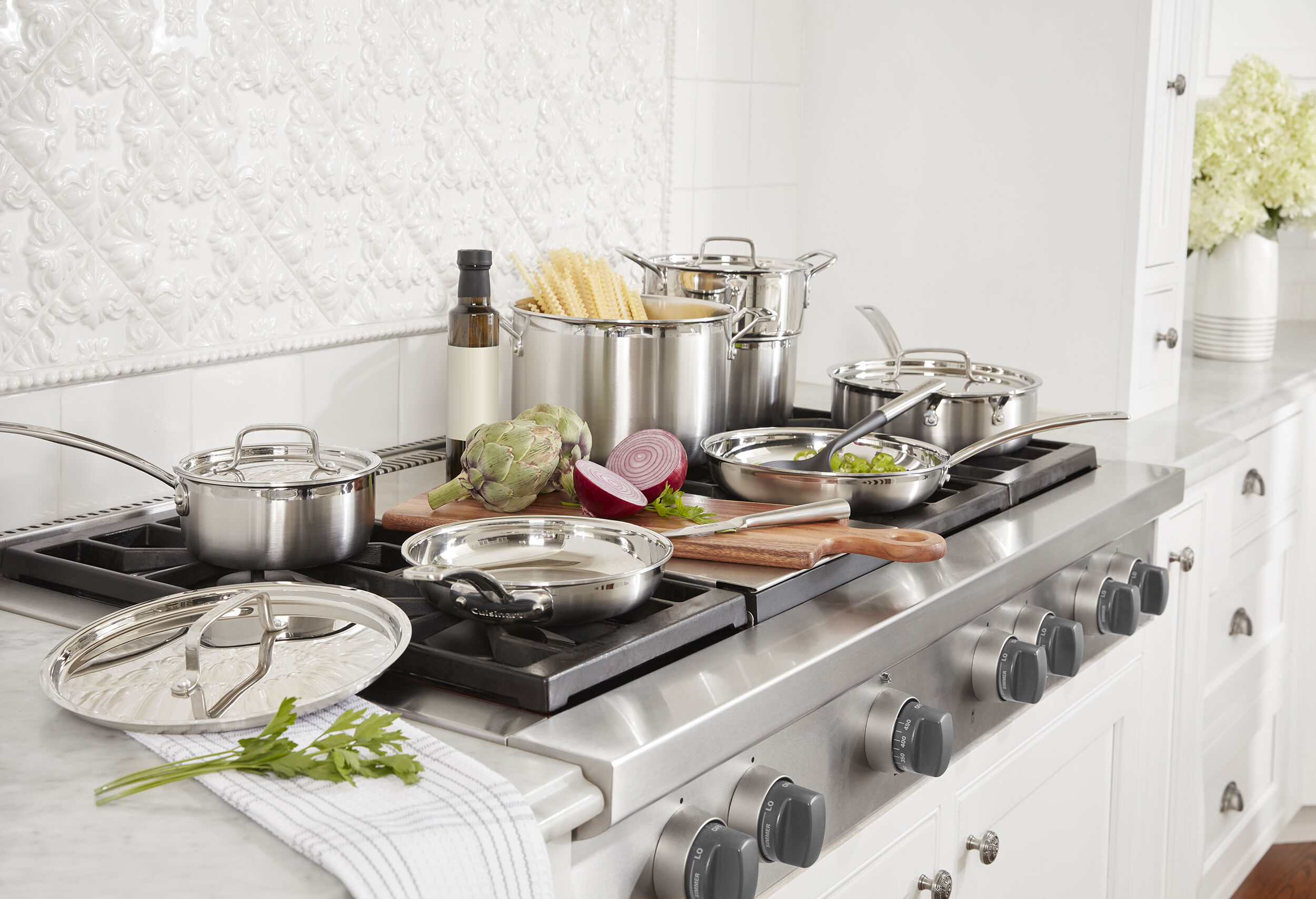
Cuisinart’s stainless steel cookware, including Chef’s Classic and Professional Series™, features polished stainless handles often attached with sturdy rivets. These handles are shaped for a balanced grip and are designed to be comfortable to grip. Always use an oven mitt or towel when cooking at higher temperatures or transferring pans.
CuisinartⓇ MultiClad Pro
CuisinartⓇ MultiClad Pro handles are ergonomically designed with a slight angle and substantial width, which helps dissipate heat across a broader surface. Their shape and balance improve comfort and reduce hot spots under normal cooking conditions.
Hard Anodized & Nonstick Lines
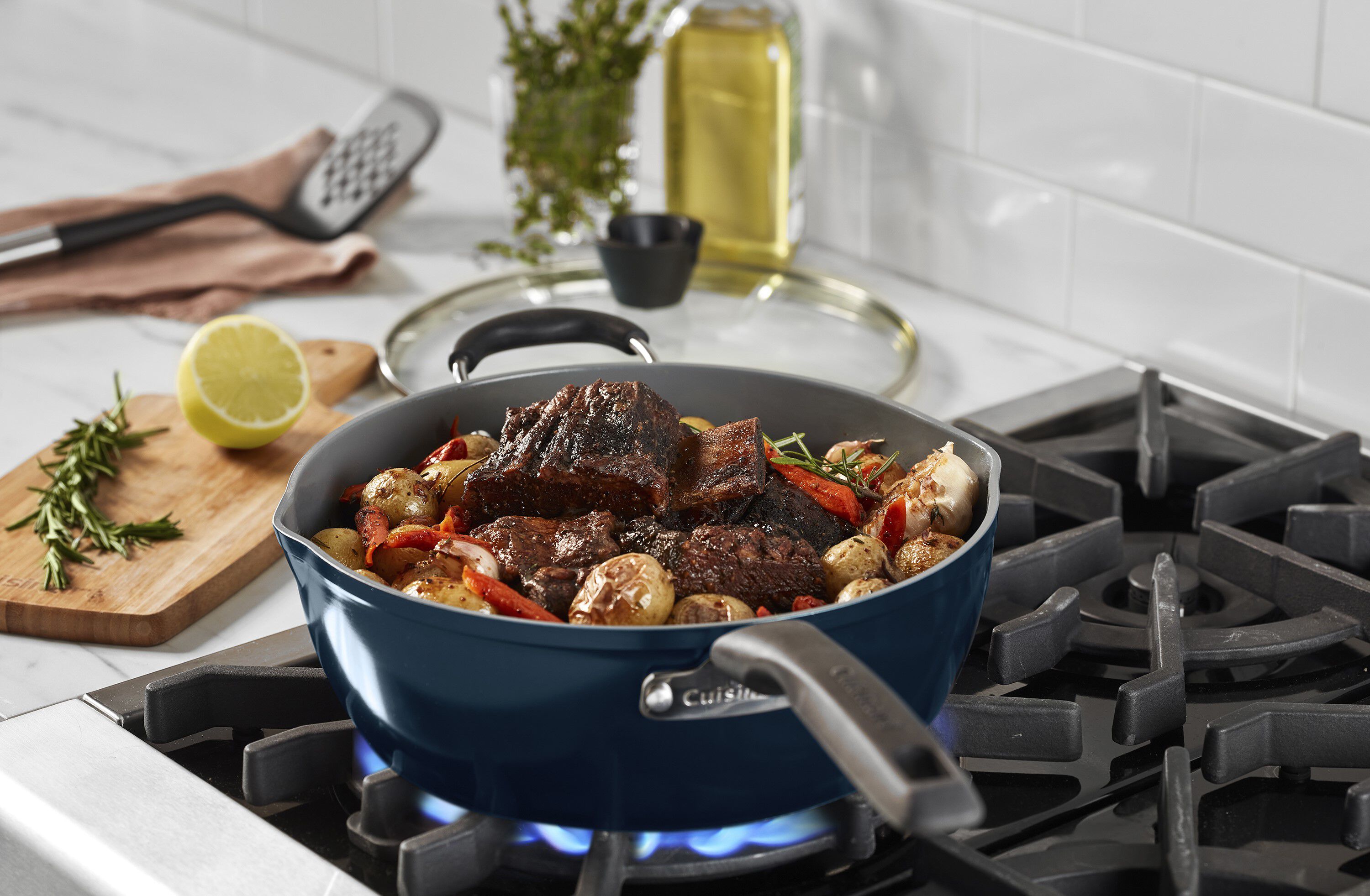
Hard anodized and PFAS-free nonstick cookware often feature handles with contoured grips and sometimes a slight coating or finish that feels cooler when exposed to typical stovetop heat. These handles are usually welded rather than riveted, creating a smooth interior surface and a secure, comfortable hold.
Ceramic & Other Specialty Lines
Ceramic nonstick cookware (like CuisinartⓇ Ceramica XT) typically features soft-grip or heat-resistant handles that stay relatively cooler and offer a secure grip when cooking on medium heat.
Riveted vs. Welded Handles
- Riveted handles are extremely durable and common on stainless steel cookware. They provide strength but create small interior edges that require gentle cleaning.
- Welded handles, often found on nonstick and ceramic pieces, create a seamless interior surface that’s easy to clean and can contribute to a slightly cooler feel.
Comfort & Safety Tips
- Use mitts on stainless steel handles when cooking at high heat or with open flames.
- Look for ergonomic grips if comfort is a priority for frequent cooks.
- Be mindful that all metal handles conduct some heat, even those designed to stay cooler.
What to Look For in Your Handle
- Handle shape and thickness.
- Whether the handle has a heat-resistant coating or thermal break.
- Welded handles for seamless interiors and ease of cleaning.
Cookware by CuisinartⓇ
Cuisinart offers cookware with a range of handle designs so you can find pieces that feel secure and comfortable for the way you cook most often, whether that’s gentle sautéing or high-heat searing.